
2023
Software Outsourcing
Software Outsourcing Journal is the platform that provides all necessary information, objective reviews about top software outsourcing companies.
Software
USA
Know More
The website must convey the large amounts of firm data while maintaining a high-quality, globally friendly interface.
My Responsiblity
Role | UX/UI Designer |
Scope | Visual design, Layout improvement, UI Component, Style Guide |
Team |
|
Goal | Design a website that showcases the top software outsourcing companies in the region, using a consistent design template that adapts to each company’s detail page with unique content. |
Outcome | A set of components designed as templates for use across the site and future satellite pages. |
Problem
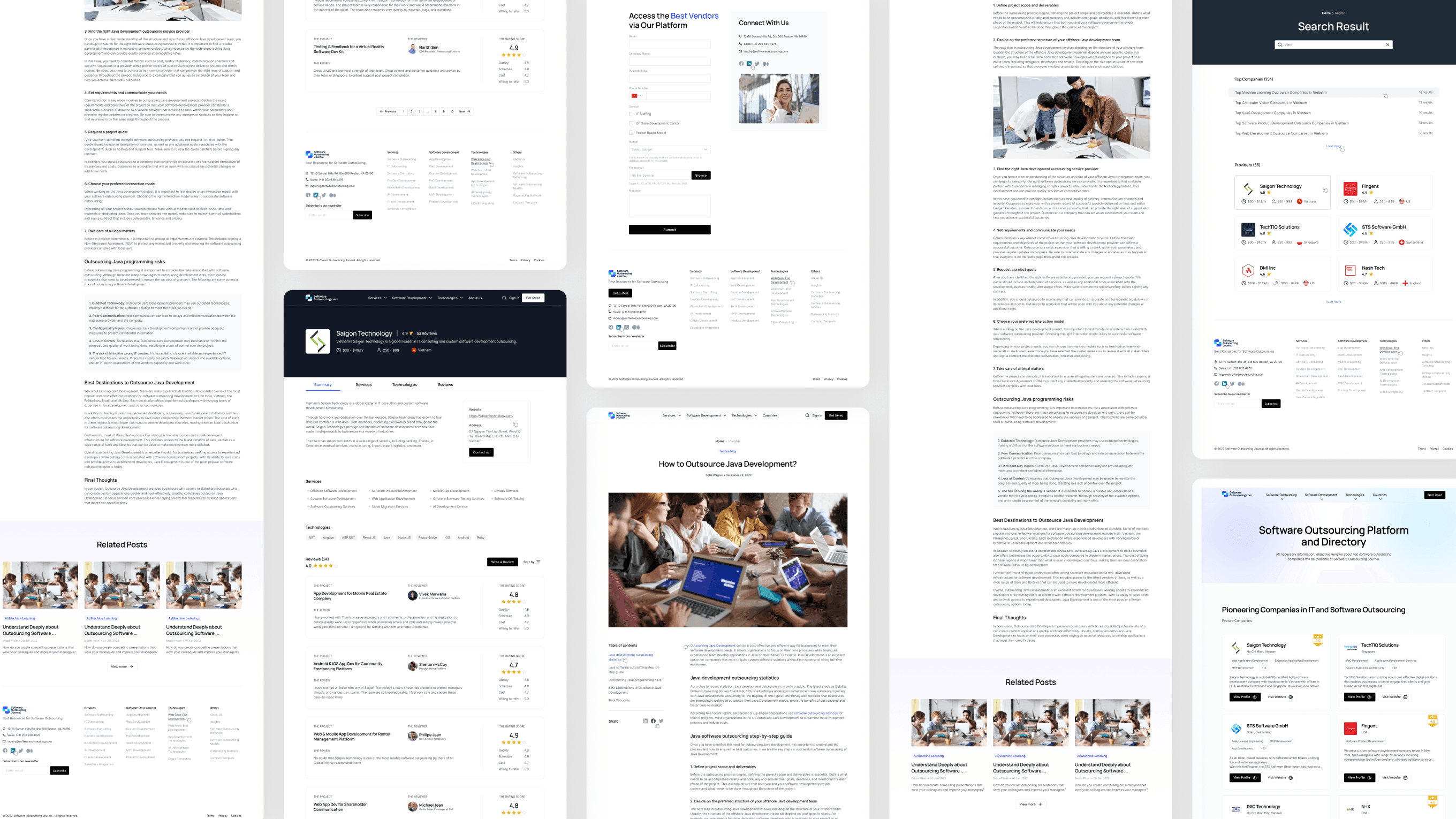
As a latecomer, Software Outsourcing Journal may struggle to establish a presence in the market due to the number of competing websites offering equivalent content.

Solution
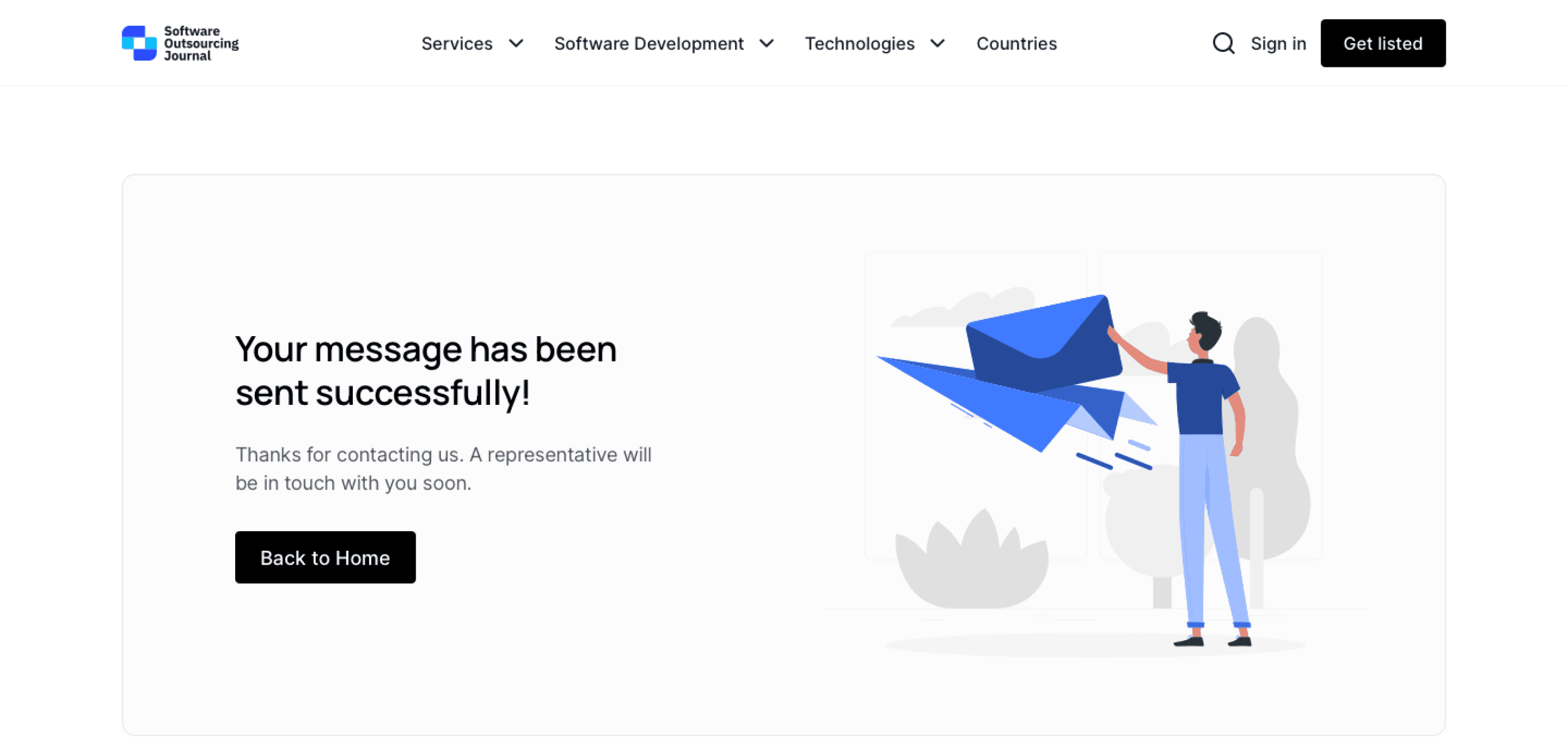
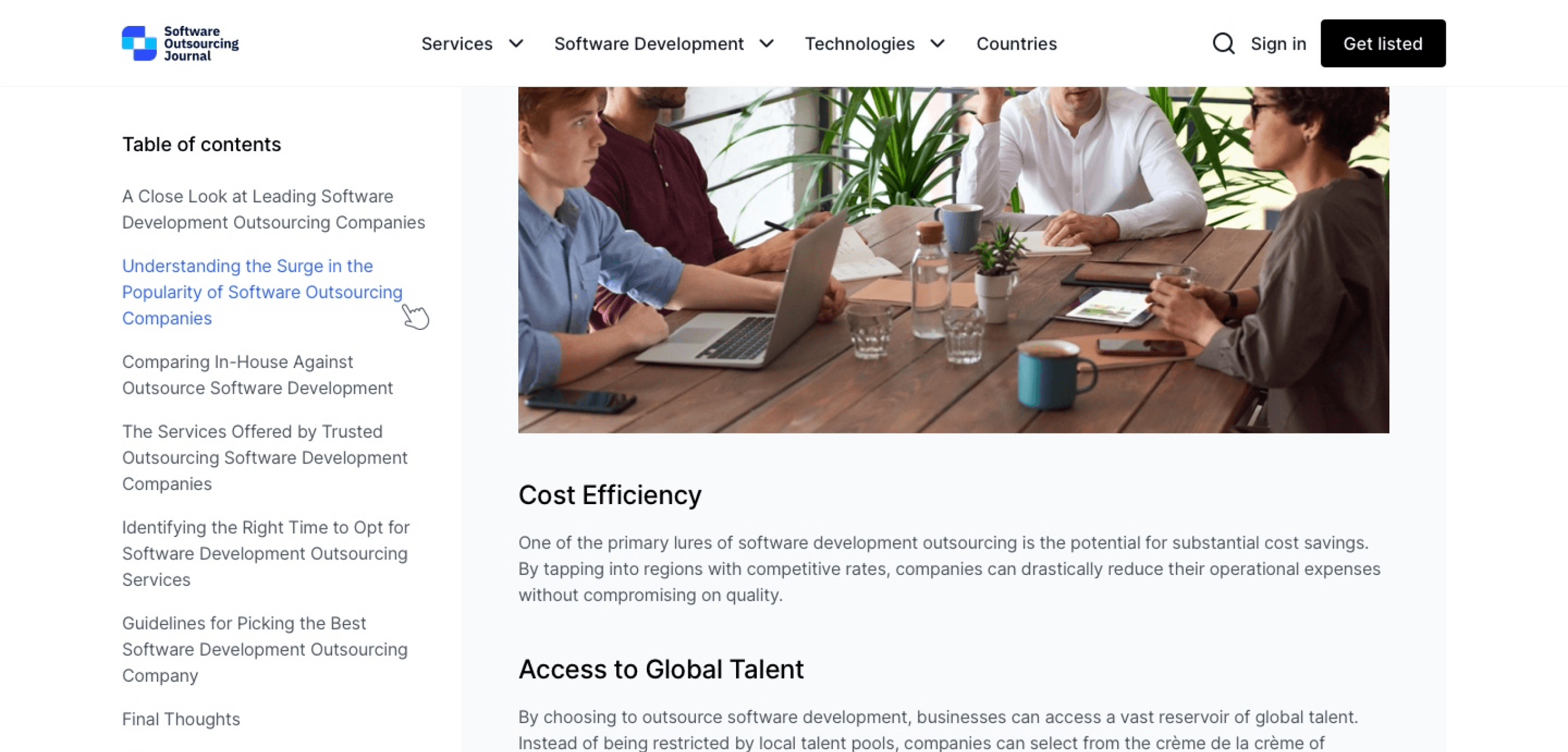
Develop a strong visual identity that sets the website apart from competitors. This includes using unique color palettes, typography, and imagery that reflects the brand's personality.
Compelling Information Design: Present information in a clear, concise, and visually engaging way to capture user attention. Utilize data visualization techniques like infographics and charts to make complex information easily understandable.
Branding Integration: Incorporate the brand identity consistently throughout the website. This reinforces brand recognition and builds trust with users.
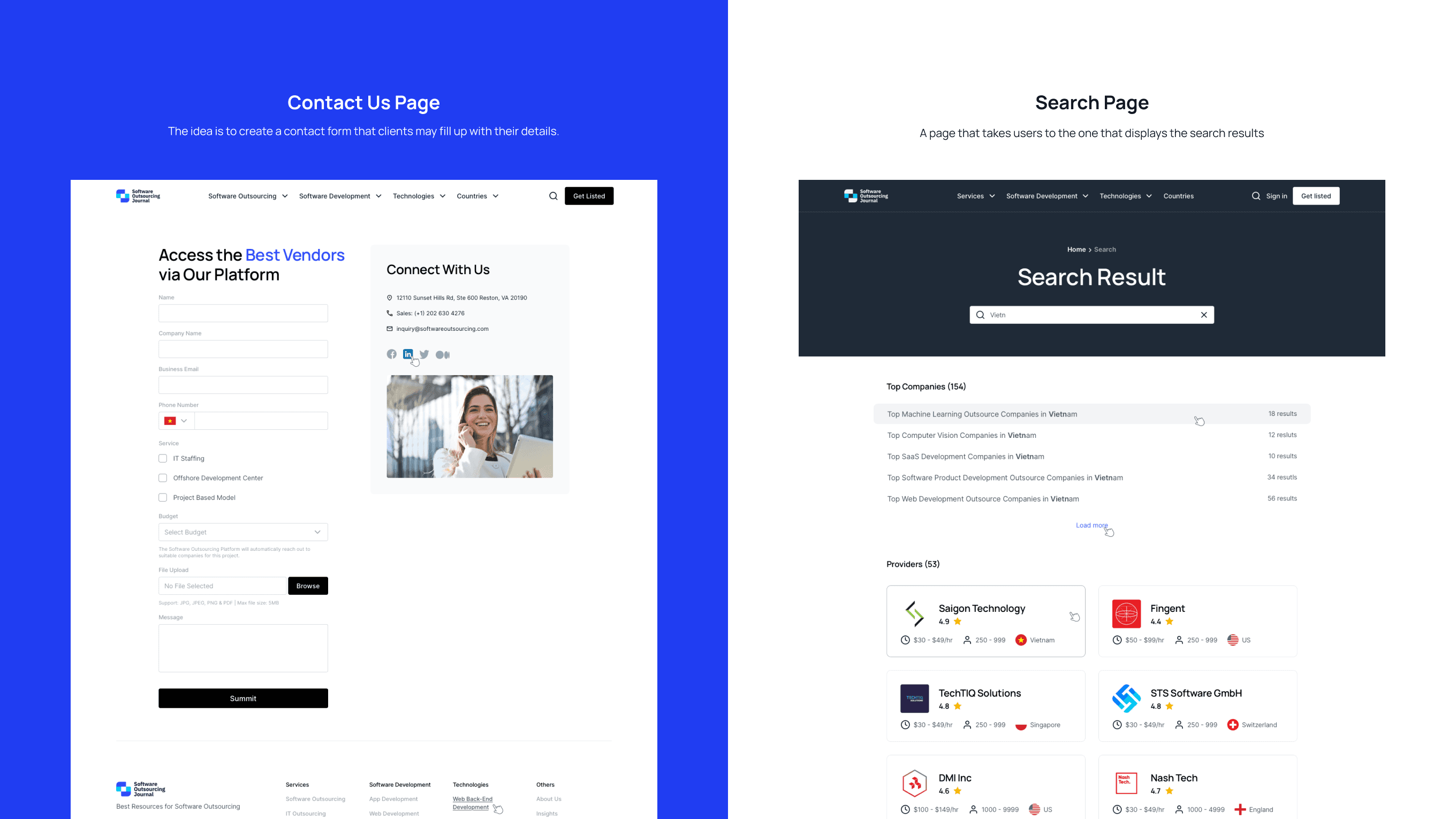
Templates: Develop a company detail template with pre-defined sections for company logos, descriptions, information details, etc. This ensures consistency across all pages while allowing for customization of company-specific content.
Design Process
🕵️ Sprint 1: User Research and Discovery
- Goal: Define the target audience and understand their needs.
- Activities: User interviews, surveys, competitor analysis.
- Deliverables: Target audience & their pain points list

✍️ Sprint 2: Information Architecture and Content Strategy
- Goal: Organize website content for optimal user experience.
- Activities: Site mapping, content inventory, keyword research.
- Deliverables: Sitemap outlining content hierarchy, content style guide.

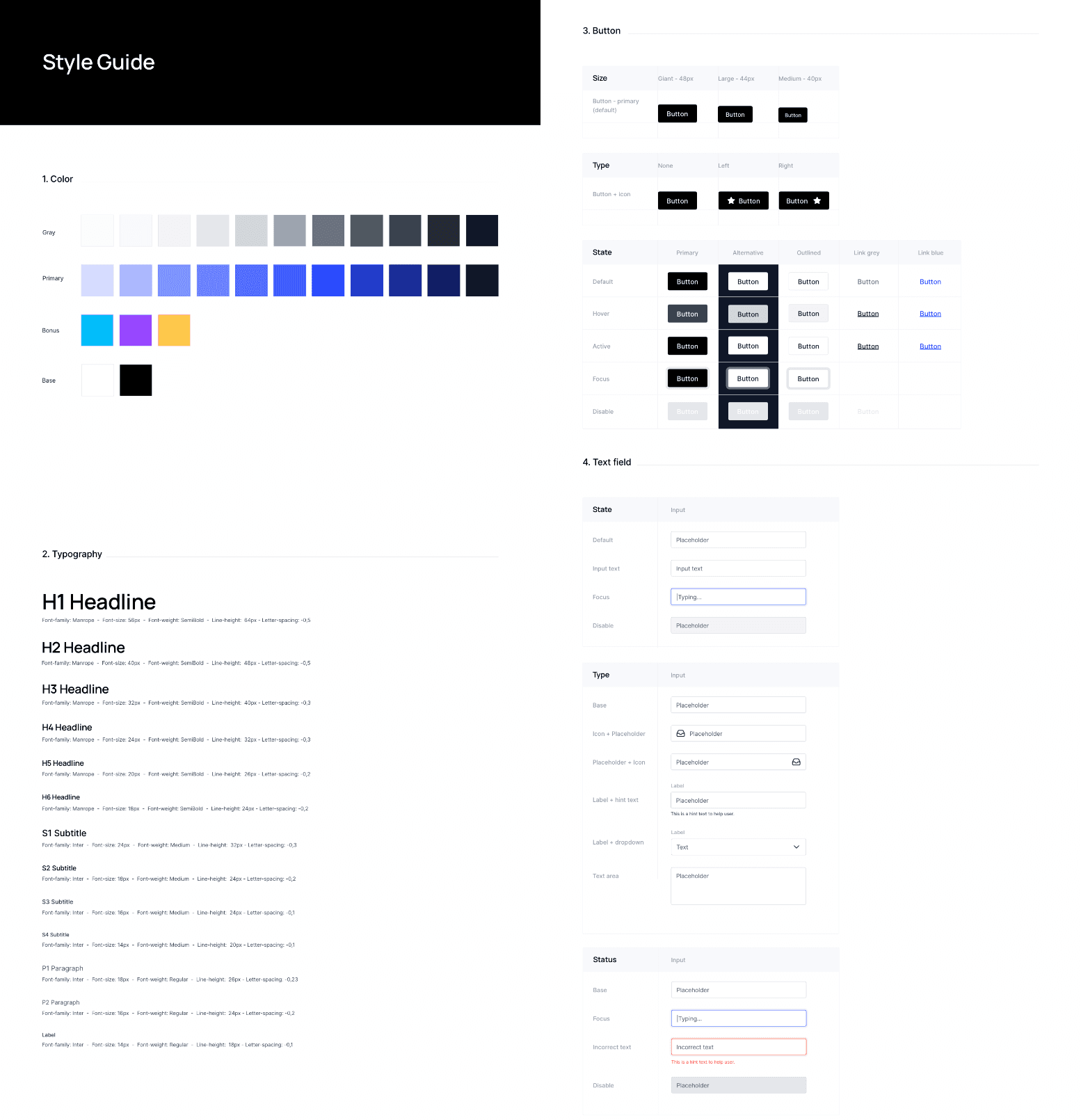
✏ Sprint 3: Wireframing and Build Style Guide
- Goal: Create low-fidelity mockups to define user interface (UI) layout and functionality.
- Activities: Sketching wireframes, and building design guidelines.
- Deliverables: Low-fidelity wireframes, style guide.
✒ Sprint 4: User Testing and Design Iteration
- Goal: Gather user feedback on the wireframe and identify usability issues.
- Activities: User testing sessions, analyzing user feedback.
- Deliverables: Refined wireframes incorporating user feedback.
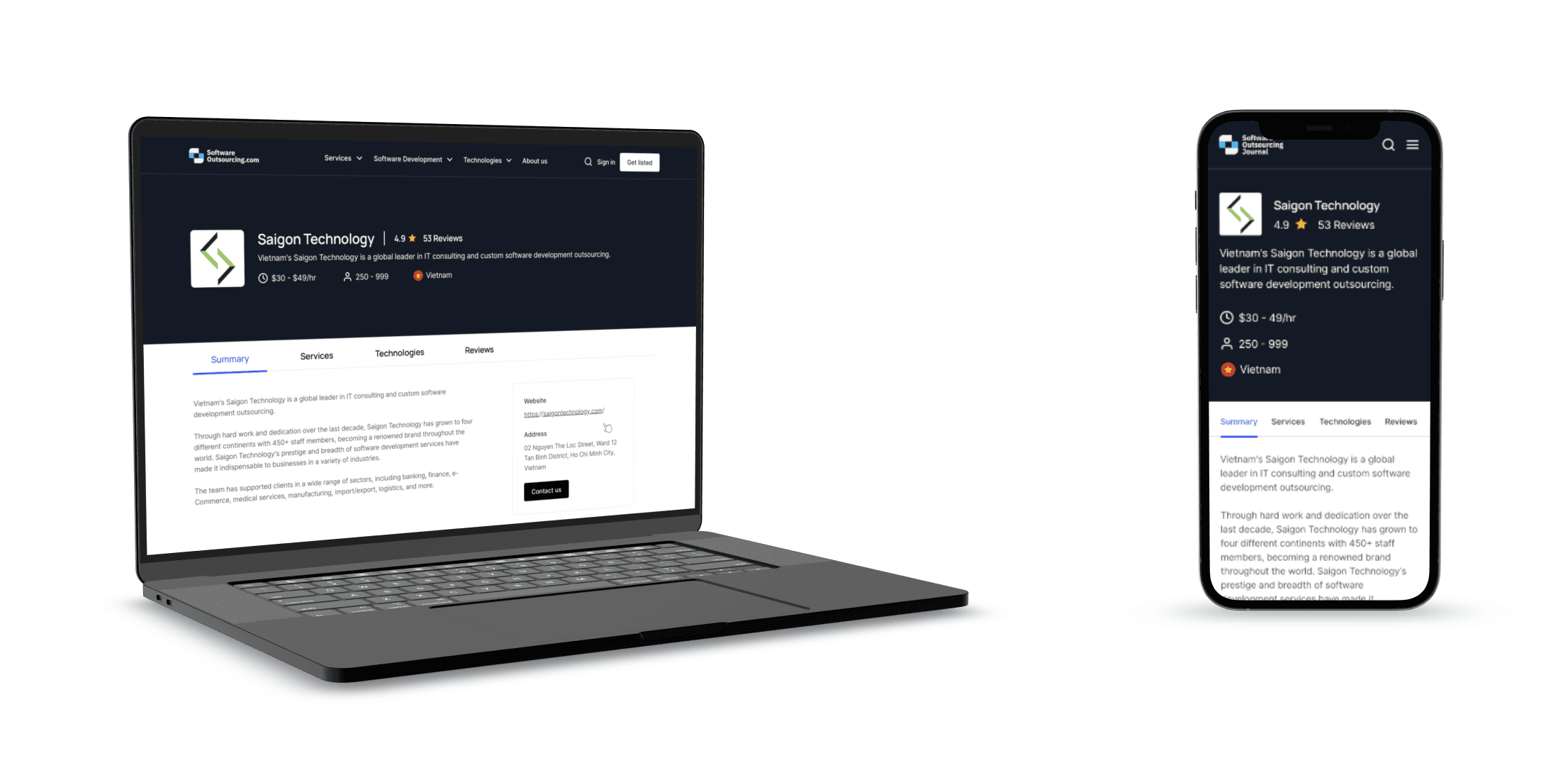
🖥 Sprint 5-6: Visual Design and Development
- Goal: Apply visual identity and develop website functionality.
- Activities: Design visual elements, front-end and back-end development.
- Deliverables: High-fidelity mockups, functional website for internal testing.
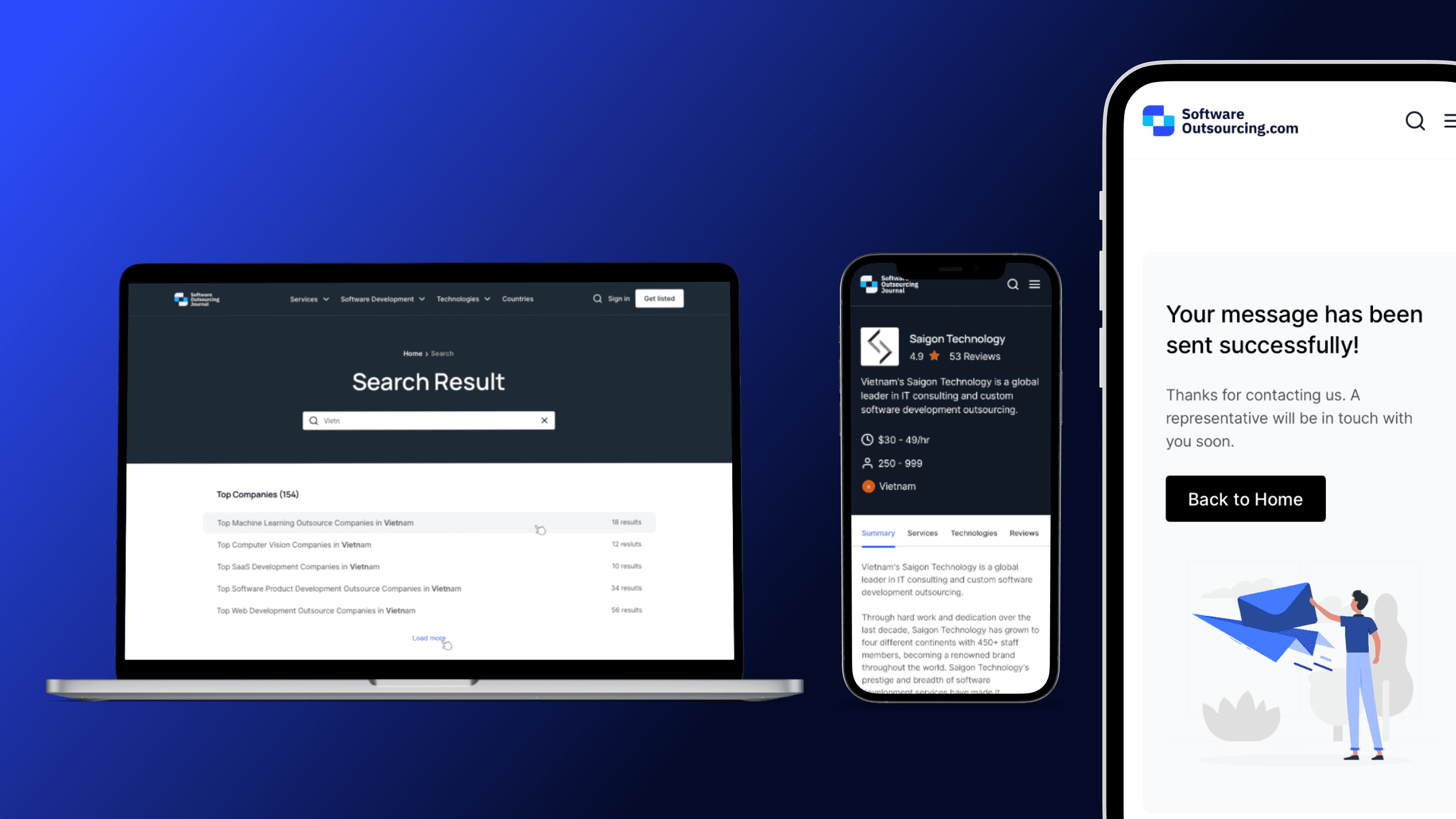
🚀 Sprint 7: Testing and Deployment
- Goal: Ensure website functionality and identify any bugs.
- Activities: Cross-browser testing, bug fixes.
- Deliverables: Finalized website ready for launch.

More Works
(GQ® — 02)
©2024
FAQ
01
What does a project look like?
02
How is the pricing structure?
03
Are all projects fixed scope?
04
What is the ROI?
05
How do we measure success?
06
What do I need to get started?
07
How easy is it to edit for beginners?
08
Do I need to know how to code?
2023
Software Outsourcing
Software Outsourcing Journal is the platform that provides all necessary information, objective reviews about top software outsourcing companies.
Software
USA
Know More
The website must convey the large amounts of firm data while maintaining a high-quality, globally friendly interface.
My Responsiblity
Role | UX/UI Designer |
Scope | Visual design, Layout improvement, UI Component, Style Guide |
Team |
|
Goal | Design a website that showcases the top software outsourcing companies in the region, using a consistent design template that adapts to each company’s detail page with unique content. |
Outcome | A set of components designed as templates for use across the site and future satellite pages. |
Problem
As a latecomer, Software Outsourcing Journal may struggle to establish a presence in the market due to the number of competing websites offering equivalent content.
Solution
Develop a strong visual identity that sets the website apart from competitors. This includes using unique color palettes, typography, and imagery that reflects the brand's personality.
Compelling Information Design: Present information in a clear, concise, and visually engaging way to capture user attention. Utilize data visualization techniques like infographics and charts to make complex information easily understandable.
Branding Integration: Incorporate the brand identity consistently throughout the website. This reinforces brand recognition and builds trust with users.
Templates: Develop a company detail template with pre-defined sections for company logos, descriptions, information details, etc. This ensures consistency across all pages while allowing for customization of company-specific content.
Design Process
🕵️ Sprint 1: User Research and Discovery
- Goal: Define the target audience and understand their needs.
- Activities: User interviews, surveys, competitor analysis.
- Deliverables: Target audience & their pain points list
✍️ Sprint 2: Information Architecture and Content Strategy
- Goal: Organize website content for optimal user experience.
- Activities: Site mapping, content inventory, keyword research.
- Deliverables: Sitemap outlining content hierarchy, content style guide.
✏ Sprint 3: Wireframing and Build Style Guide
- Goal: Create low-fidelity mockups to define user interface (UI) layout and functionality.
- Activities: Sketching wireframes, and building design guidelines.
- Deliverables: Low-fidelity wireframes, style guide.
✒ Sprint 4: User Testing and Design Iteration
- Goal: Gather user feedback on the wireframe and identify usability issues.
- Activities: User testing sessions, analyzing user feedback.
- Deliverables: Refined wireframes incorporating user feedback.
🖥 Sprint 5-6: Visual Design and Development
- Goal: Apply visual identity and develop website functionality.
- Activities: Design visual elements, front-end and back-end development.
- Deliverables: High-fidelity mockups, functional website for internal testing.
🚀 Sprint 7: Testing and Deployment
- Goal: Ensure website functionality and identify any bugs.
- Activities: Cross-browser testing, bug fixes.
- Deliverables: Finalized website ready for launch.
More Works
(GQ® — 02)
©2024
FAQ
01
What does a project look like?
02
How is the pricing structure?
03
Are all projects fixed scope?
04
What is the ROI?
05
How do we measure success?
06
What do I need to get started?
07
How easy is it to edit for beginners?
08
Do I need to know how to code?
2023
Software Outsourcing
Software Outsourcing Journal is the platform that provides all necessary information, objective reviews about top software outsourcing companies.
Software
USA
Know More
The website must convey the large amounts of firm data while maintaining a high-quality, globally friendly interface.
My Responsiblity
Role | UX/UI Designer |
Scope | Visual design, Layout improvement, UI Component, Style Guide |
Team |
|
Goal | Design a website that showcases the top software outsourcing companies in the region, using a consistent design template that adapts to each company’s detail page with unique content. |
Outcome | A set of components designed as templates for use across the site and future satellite pages. |
Problem
As a latecomer, Software Outsourcing Journal may struggle to establish a presence in the market due to the number of competing websites offering equivalent content.
Solution
Develop a strong visual identity that sets the website apart from competitors. This includes using unique color palettes, typography, and imagery that reflects the brand's personality.
Compelling Information Design: Present information in a clear, concise, and visually engaging way to capture user attention. Utilize data visualization techniques like infographics and charts to make complex information easily understandable.
Branding Integration: Incorporate the brand identity consistently throughout the website. This reinforces brand recognition and builds trust with users.
Templates: Develop a company detail template with pre-defined sections for company logos, descriptions, information details, etc. This ensures consistency across all pages while allowing for customization of company-specific content.
Design Process
🕵️ Sprint 1: User Research and Discovery
- Goal: Define the target audience and understand their needs.
- Activities: User interviews, surveys, competitor analysis.
- Deliverables: Target audience & their pain points list
✍️ Sprint 2: Information Architecture and Content Strategy
- Goal: Organize website content for optimal user experience.
- Activities: Site mapping, content inventory, keyword research.
- Deliverables: Sitemap outlining content hierarchy, content style guide.
✏ Sprint 3: Wireframing and Build Style Guide
- Goal: Create low-fidelity mockups to define user interface (UI) layout and functionality.
- Activities: Sketching wireframes, and building design guidelines.
- Deliverables: Low-fidelity wireframes, style guide.
✒ Sprint 4: User Testing and Design Iteration
- Goal: Gather user feedback on the wireframe and identify usability issues.
- Activities: User testing sessions, analyzing user feedback.
- Deliverables: Refined wireframes incorporating user feedback.
🖥 Sprint 5-6: Visual Design and Development
- Goal: Apply visual identity and develop website functionality.
- Activities: Design visual elements, front-end and back-end development.
- Deliverables: High-fidelity mockups, functional website for internal testing.
🚀 Sprint 7: Testing and Deployment
- Goal: Ensure website functionality and identify any bugs.
- Activities: Cross-browser testing, bug fixes.
- Deliverables: Finalized website ready for launch.
More Works
©2024
FAQ
What does a project look like?
How is the pricing structure?
Are all projects fixed scope?
What is the ROI?
How do we measure success?
What do I need to get started?
How easy is it to edit for beginners?
Do I need to know how to code?